Friday, May 29, 2009

What are we creating in creative writing?
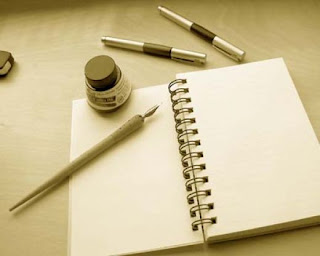
Before trying to answer the question in my title, I want to say something about why I thought it was worth asking the question in the first place?

Creative Writing is something that happens in English and literacy classes right through schooling, from kids in prep making up a story to Year 12 students producing a Writing Folio, and yet, there is not currently a lot that is written about it, at least in a theoretical way. There are books that give ideas for creative writing classes, and the odd article in the journals, usually descriptive of practice, but it’s not something that is talked about very much at all. Certainly, after the furore of the process/genre debates in the eighties, the nineties on the whole were remarkably silent on the matter of creative writing, and that seems to be continuing into the new century.


Now when there is this kind of shift in the questions people are asking, what in a subject they think is worth talking about, it's always interesting to ask why and what the implications are, particularly when, as I think is the case here, the actual classroom practice hasn't varied much: there is as much creative writing going on in schools now as there ever was. Asking such questions can help us to break open the boxes we're currently thinking in, and move through to a new and richer conception of what the subject might be.


You'll notice too that a number of times through what I am saying here, my strategy is to try to break down some of the binary oppositions that structure our thinking. It's a simple version of a deconstructive strategy: I try to show that the opposition is not absolute, but the two terms are involved in each other. I think this too is useful in breaking us out of constraining boxes. However, I also think this collapsing of opposites can be done so easily because writing is an art form, and, as I've argued elsewhere, it's of the nature of the aesthetic to hold in tension what might be binary opposites in other domains. We'll return to this notion of writing as an art form a couple of times.

Thursday, May 21, 2009

How to write a resume

A resume - sometimes called a 'Curriculum Vitae' or 'CV' - is a summary of your skills, education and work experience. A good resume demonstrates how your skills and abilities match up with the requirements of a job.


Resumes give you the opportunity to sell yourself to a potential employer. A resume is not an exhaustive list - if it's too long it probably won't get read at all. The best resumes are usually no longer than one or two pages.You should change your resume with every job application so that it lists the skills and experiences you have that are most relevant to the job you're applying for.

Resume structure


The structure of your resume will vary depending on your work experience and education and training background.A resume usually sets out information in a reverse order. Your most recent work experience and study details should be first on the list.

A typical resume includes:

Personal details - Full name and contact details including address, telephone number(s) and email address.

Education and training - A summary of your education and training history, starting with your most recent studies, making sure you include all training that's relevant to the job you're applying for.

Employment history - Start with your most recent work history and work backwards chronologically, listing the name of the employer, your job title, the dates you worked there, and your responsibilities, tasks and achievements. Make sure you include everything that's relevant to the job.

Skills and abilities - A list of the things you're good at. These can be general skills or skills specific to a particular job. List them under broad headings such as "Communication" and "Teamwork".

Career objective - (optional) Tell the employer what type of job you want end up with; this shows that you've given thought to your future career.

Interests - (optional) A list of your hobbies and interests; this gives employers more information about you and also shows other areas of your life where you've gained experiences such as teamwork and committment

Referees - List people who can talk about how good a worker you are. Make sure you get their permission before including them on your resume. List their name, company name occupation, and contact details.

Thursday, May 14, 2009

Writing Resumes

As you may have noticed if you have begun your Federal job search, agencies have varying and unique application procedures to meet their hiring needs. One application format may be acceptable for one agency and not another. In the past, this proved to be frustrating for job seekers applying to multiple positions.


Building your resume on USAJOBS
In an effort to drive the Federal hiring process toward a universal application format, the Office of Personnel Management (OPM) gathered together several agencies from around the government to create one resume format that would include all of the crucial data required for Federal application into one uniform resume format.

The product that resulted was the USAJOBS Resume Builder. The USAJOBS Resume Builder allows you to create one uniform resume that provides all of the information required by government agencies. Instead of creating multiple resumes in different formats, you can build your resume once and be ready for all job opportunities.

Resume and KSA (knowledge, skills & abilities) tips
A Single Keyword Communicates Multiple Skills and Qualifications
When a recruiter reads the keyword "analyst," he or she might assume you have experience in collecting data, evaluating effectiveness, and researching and developing new processes. Just one keyword can have tremendous power and deliver a huge message.
Study Job Announcements
This is the best way to determine important keywords. Review several job announcements and their questions for your ideal position. The jobs don't have to be in your geographic target area. The idea is to find skills, experience, education and other credentials important in your field. You will probably find keywords frequently mentioned by different agencies. Focus on the "requirements," "skills" or "qualifications" sections of job ads, and look for “buzzwords” and desirable credentials for your ideal job.

Saturday, May 2, 2009

Research Assistant Wildlife Division

General Description:

This volunteer will collect deer heads from road-killed and hunter-harvested deer for examination to monitor for the presence of Chronic Wasting Disease. The volunteer will handle the deer heads according to established protocols, and deliver the heads as directed for testing.

Specific Duties:-

>> Patrol designated district to collect deer heads from various locations

>> Liaison with VDGIF staff, hunt clubs, VDOT, localities, and individuals to collect deer heads for testing

>> Follow established safety protocols to prepare deer heads for delivery and testing

>> Tag and record samples collected by date, location, individual�.. on forms provided by VDGIF

>> Deliver heads to testing site

>> Follow established protocols to disinfect transport containers

Qualifications:-

>> Must be able to drive own or state vehicle to accomplish duties

>> Must be able to follow established procedure and protocols

>> Must be able to handle a dead animal and dismember as necessary for testing

>> Must be able to lift the weight of a deer head, and to drag a deer on occasion, to provide for volunteer safety along roadway collection site

>> Must have means to deliver deer head in a timely manner to the testing site

>> Must be able to follow road directions and locate specimens

>> Must be able to keep clear and accurate records

Training:-

>> Orientation

>> Written protocols and procedures for proper handling of specimens

>> On the job training as needed